10 June 2006

Day 14 - Ca' Mocenigo, Basilica San Marco, Caffé Florian and Vivaldi's Four Seasons

This morning we went on a mission to find a palazzo with interiors intact. We had heard that Ca' Mocenigo in Santa Croce, which we were told was more or less as it was in the 18th century.

It was a smallish palace, by Venetian standards, but the rooms were certainly grand and ornate. To our delight, the rooms we saw were indeed furnished and other other items of interest, including period clothing. We certainly recommend this small museum to anyone who visits Venice. The place was almost deserted - we wonder what all the other tourists in Venice are looking for?

We crossed the Grand Canal by traghetto. These are old gondolas that just cross the canal back and forth. Much less glamourous than a gondola ride, but much cheaper (50 cents vs 80€). It saved us alot of time walking all the way to the nearest bridge, too.

After stopping in a bakery for lunch, we visited a small church which is apparently a favourite amongst the locals. We could see why. The name of the church is Santa Maria dei Miracoli. The marble inside and out is quite beautiful.

The beautiful, small church, Santa Maria dei Miracoli.

Next stop was a somewhat larger and more famous church - Basilica San Marco. Certainly in a very different style to the churches we had visited in Paris and Avignon. We visited the Treasury to have a look are the artifacts, and all the yucky relics - hands, teeth, arms, etc. supposedly of saints.

Basilica San Marco.
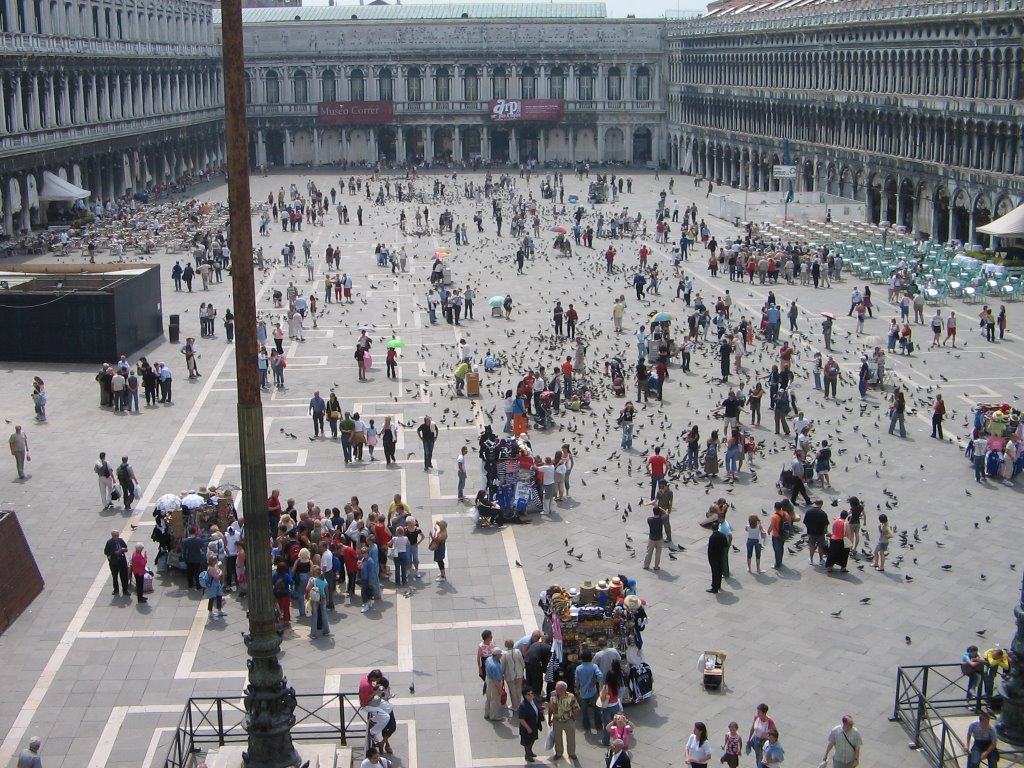


View of the Piazza from Basilica San Marco. You can see Caffé Florian on the left. Yep, those are thousands of pigeons.

While in Piazza San Marco, we decided to have coffee in one of the famously expensive cafes. The only question was Florian or Quadri.

We settled on Florian, which is apparently the oldest cafe in Italy, having opened in 1720. We had coffee and cake for two, which was a nice experience, but probably not worth the 50€ it cost us. It's not the sort of thing you would do more than once.


David in Caffé Florian.


Our nicely presented coffee and cake in Caffé Florian.

We headed back to the hotel to get changed for the concert. After Florian we chose to have a cheap and cheerful dinner of takeaway pizza.
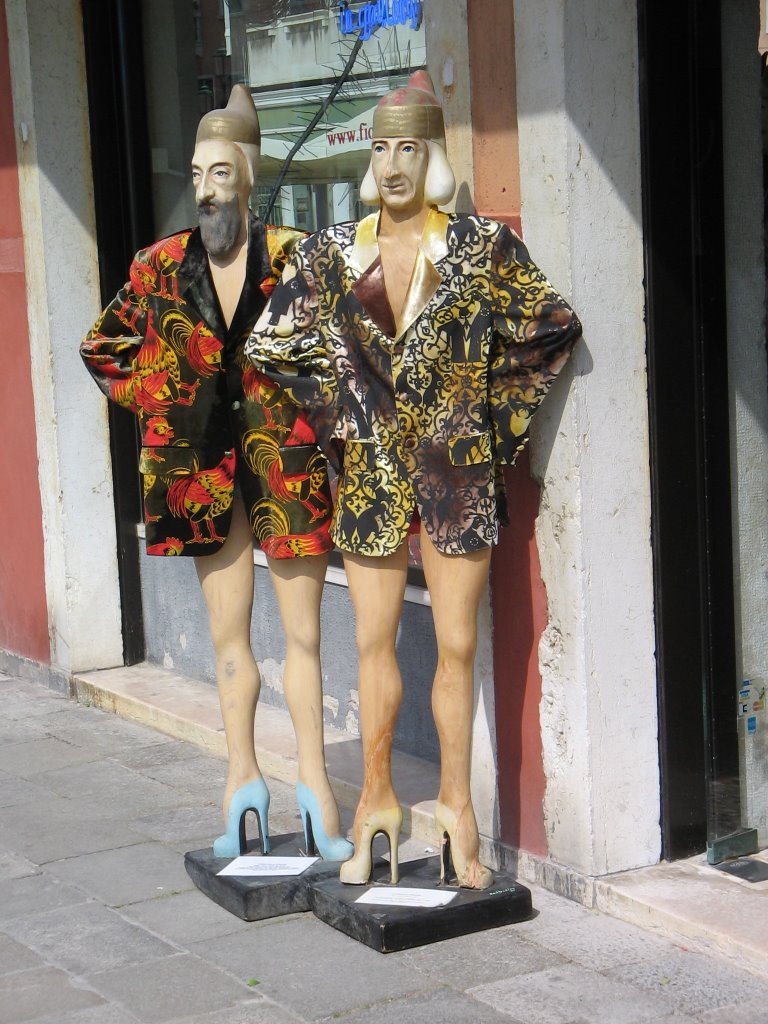
This unusual store uses mannequins in the form of Venetian doges - in high heels.

Having a bit of time to explore San Marco, we found the famous opera house, La Fenice, and Palazzo Contarini del Bovolo, which was tucked away in a maze of alleyways but worth seeking out (look at the picture, you'll see what we mean).

The famous staircase of Palazzo Contarini del Bovolo.

The concert was Vivaldi's Four Seasons (Le quattro stagioni) as played by an ensemble called Interpreti Veneziani, a very talented group.

Day 13 - Palazzo Ducale and the Campanile

After a morning doing our laundry at the busiest time of day, we dropped into a bakery for a cheap lunch.

Afterwards we decided to brave the crowds and visit the Doge's Palace (Palazzo Ducale) in San Marco. Surprisingly the queue was short and we spent a while exploring this grand building. The inside was largely bare of furniture (which we're noticing is a trend in European historic houses) with very little information given beyond who painted the walls and the ceiling and what school they belonged to.


A blurry picture of the Sala del Maggior Consiglio, or Great Council Hall.


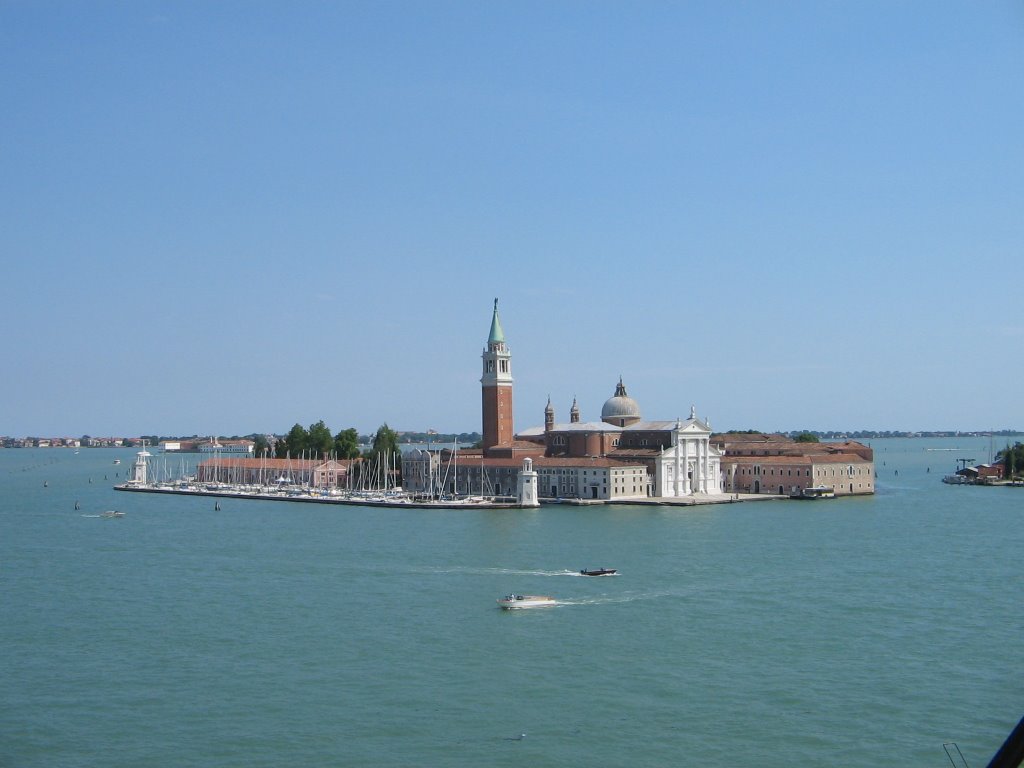
A view of San Giorgio Maggiore from Palazzo Ducale.


The palace had an amazing number of waiting rooms and committee rooms, with the Grand Council chamber being the most enormous and impressive.

We crossed the Bridge of Sighs that links the palace to the prisons, resisting the temptation to sigh unlike most of our fellow tourists. The prison was one of the first purpose built in the world, and was intended to improve prisoners' conditions. Casanova is supposed to have escaped from here. There was some interesting graffiti but very little explanation.


View from the Bridge of Sighs.


David in the prisons.


After our luck with the queue earlier, we were again lucky to find the queue for the campanile to be relatively short. The campanile was rebuilt in 1902 after the earlier one collapsed and today tourists are only allowed up by lift. The view from the top put Venice in perspective and we were grateful that the huge bells weren't rung while we were up there.


The Campanile.


View from the Campanile, towards Dorsoduro and Giudecca.


View across Venice towards the mainland (Mestre).


That evening we wanted to try some authentic Venetian cuisine at a restaurant called Antica Besseta. To get to the restaurant we went down the narrowest street we had seen (about 50cm wide). Sitting outside enjoying some delicious food (David had a delicious prawn and saffron pasta) it was funny to see lost tourists searching for the street only to be startled that they were in fact looking for the narrowest crack between two houses. Several others called into the restaurant - the only one on this lovely, quiet back street - for directions throughout the night.


A very narrow street.


And a very low street.

09 June 2006

Day 12 - Arrival in Venice and Ca' D'Oro

We arrived in Venice at around 8 am and walked the few steps to our hotel to leave our luggage. While we were waiting for check-in time, we wended our way through the streets of Venice, eventually crossing the city to San Marco. The streets of Venice are even more maze-like than Avignon with the addition of criss-crossing canals and numerous palazzi. It is fascinating to see this place for the first time, when one is still excited by the sight of masks and supposed Murano glass in the shops and the novelty of a city in which most of the traffic is pedestrian or on water.


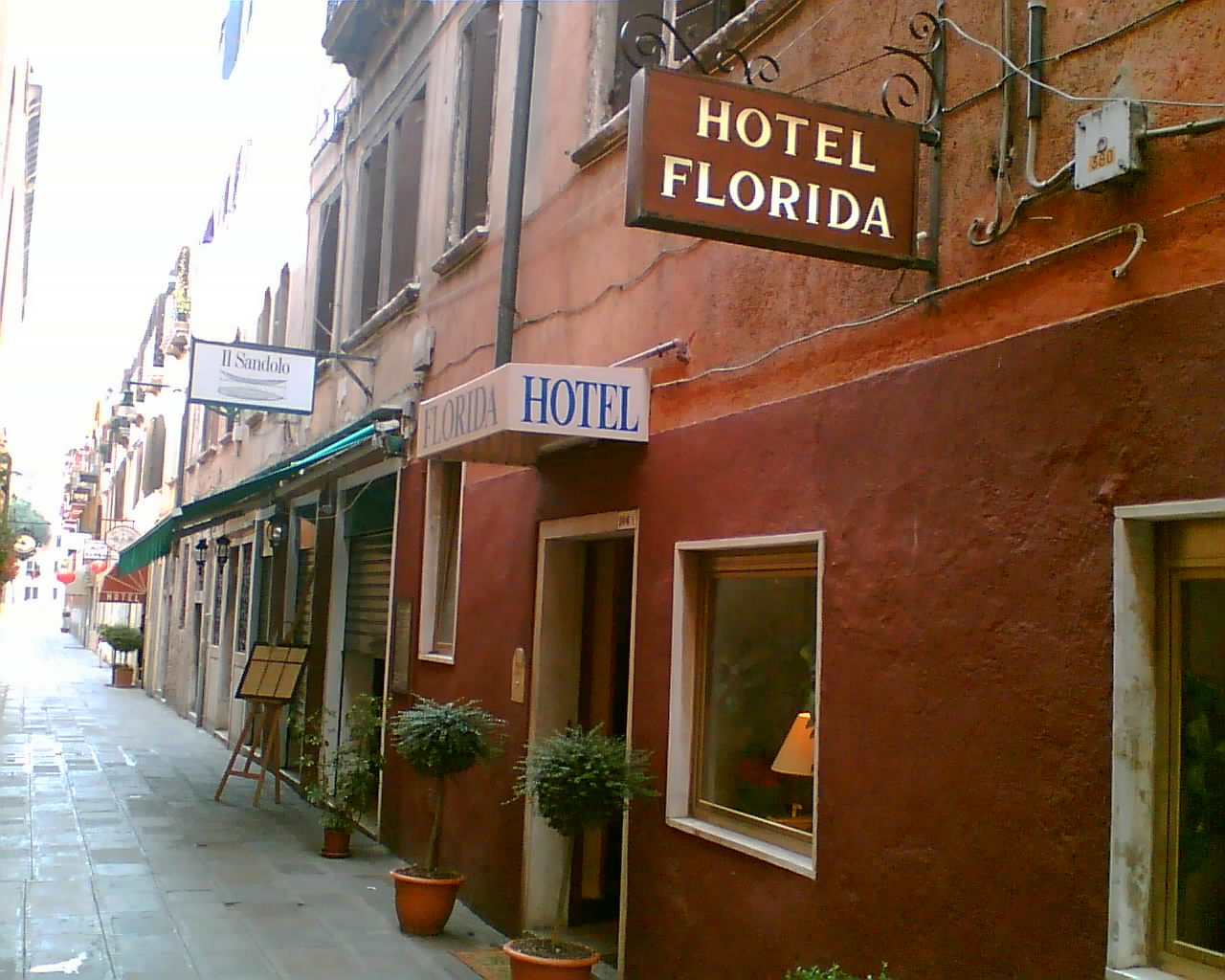
Hotel Florida, convieniently just around the corner from the train station. Very handy when you have to carry your bags! (Water taxis are very expensive.)


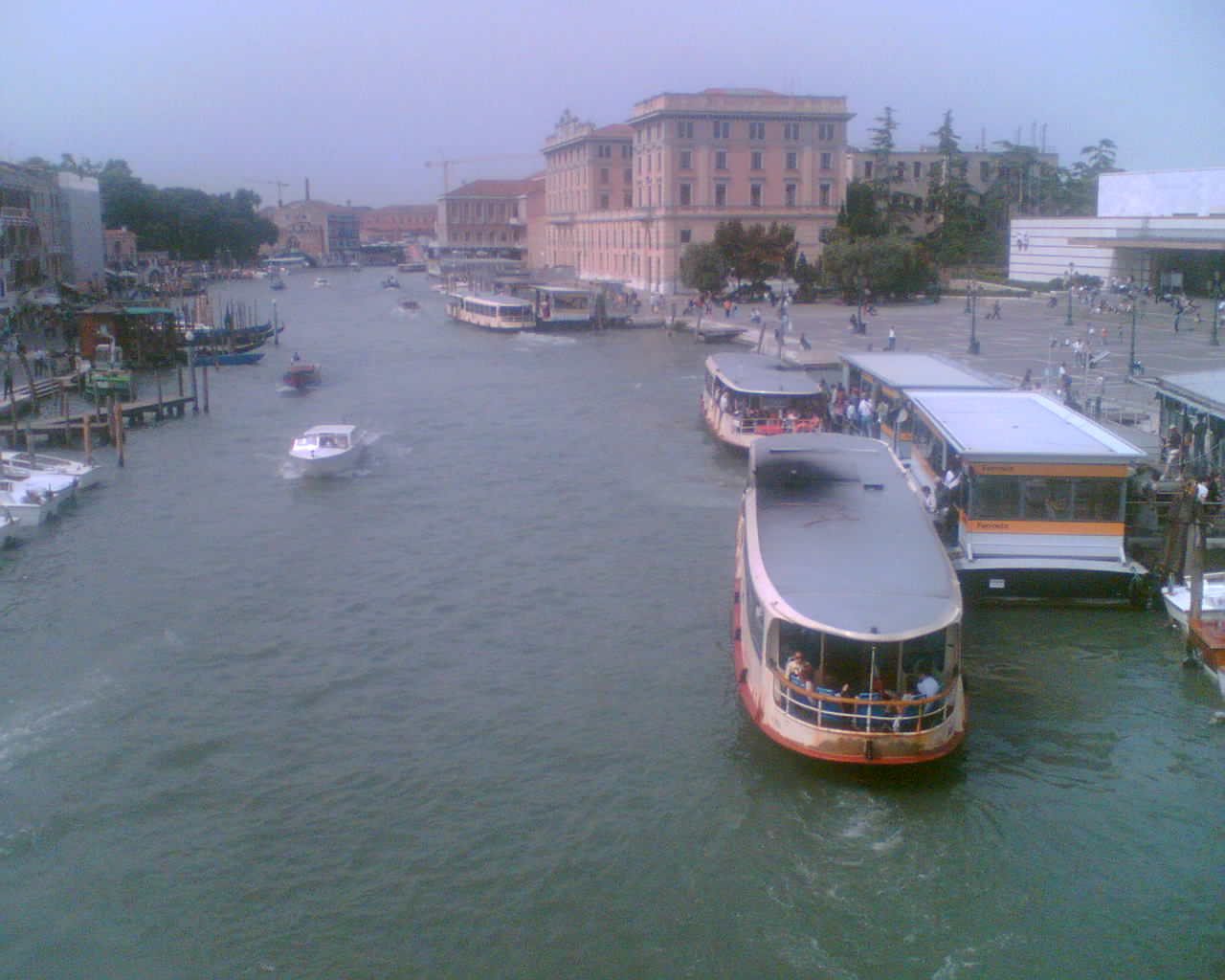
The Grand Canal in front of the train station.


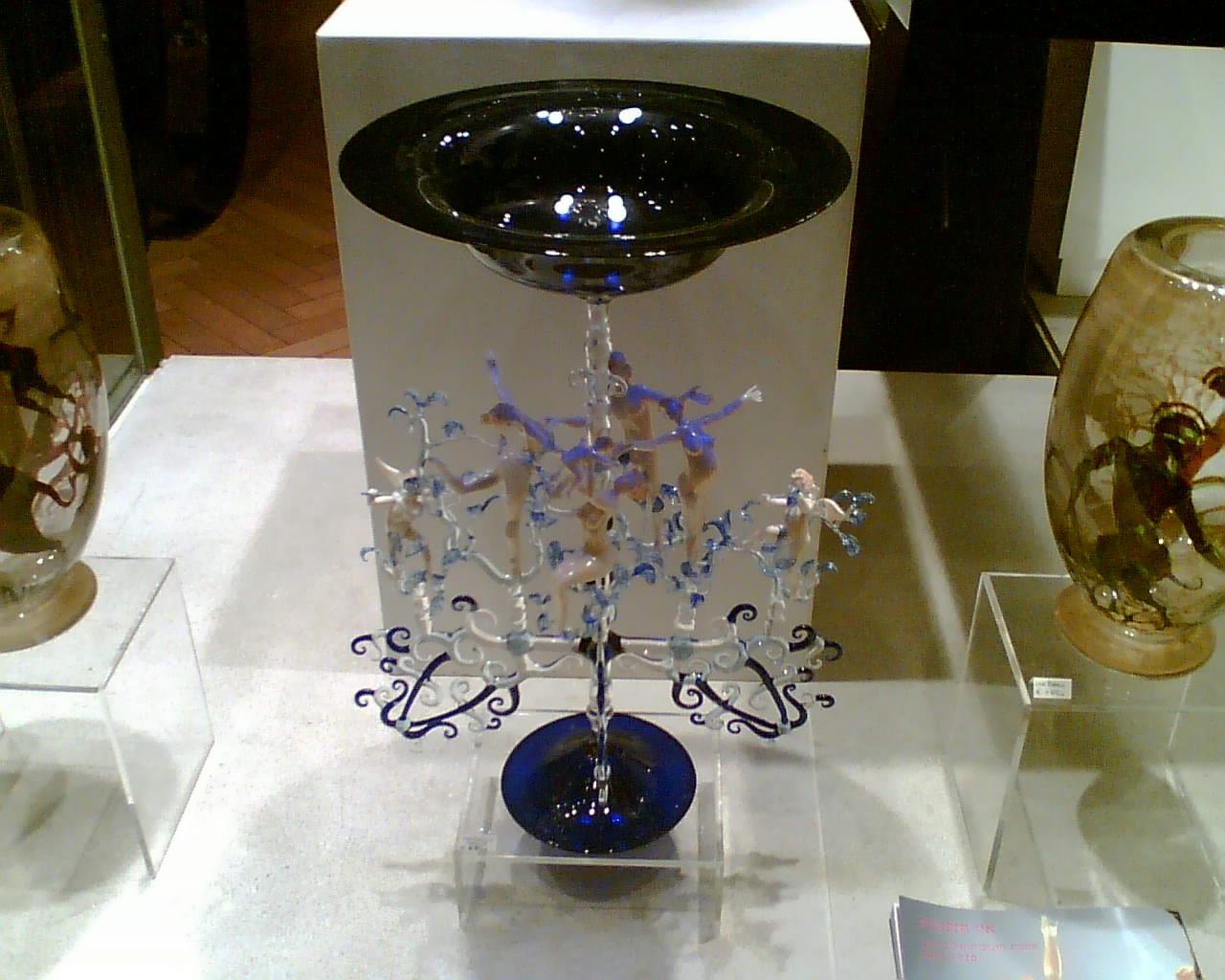
Stunning glass from Murano. Imagine trying to get this back to Australia!


We started walking early, so saw some of Venice without tourists. As our walk wore on the multitudes of tourists appeared and crammed all of the main streets.

We checked in to a really lovely room with a small balcony (albeit overlooking a narrow alley) and refreshed ourselves.

We stopped in a Jewish bakery for lunch on the way to the Venetian Ghetto. This ghetto was the first to carry that name anywhere in the world and comprises a small 'island' surrounded by canals on all sides. Since all Jews were required to live there the area is much higher density than other areas of Venice with buildings of about 6 storeys. Today it is a quiet place, off the main tourist path (which surprised us). There is a main square with a synagogue, museum and holocaust memorial.


The campo of the Venetian ghetto.


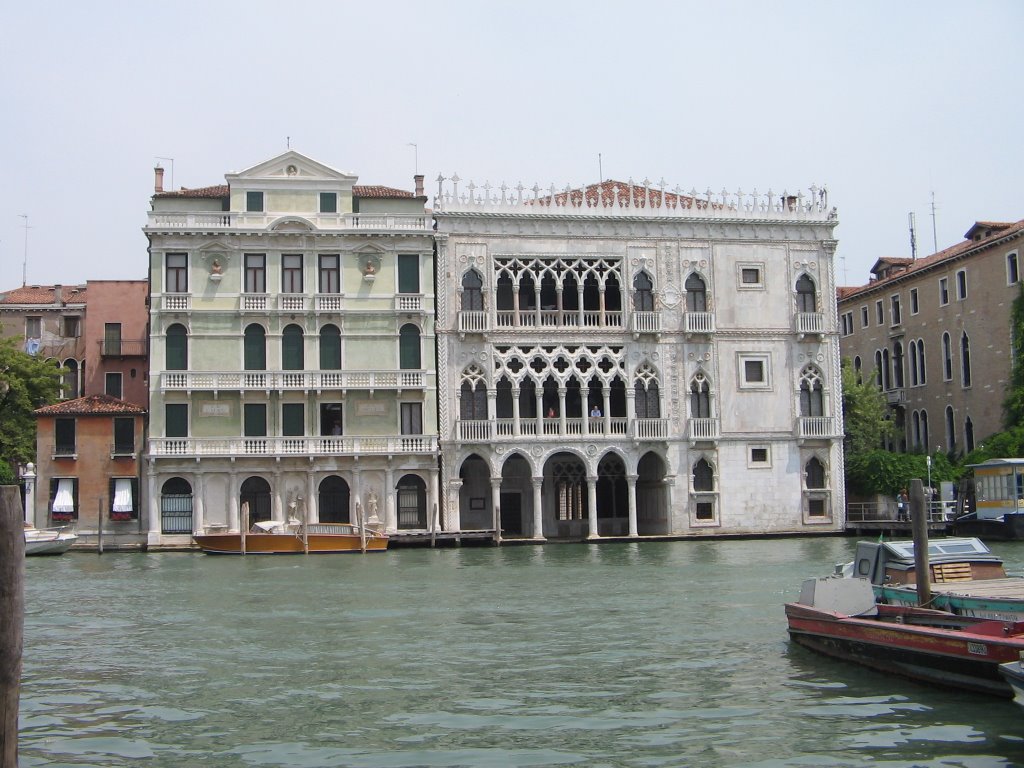
We made our way to the famous and opulant palazzo Ca' D'Oro. It is now holds an art collection but we hoped to see some of the inside of a palazzo as well. Unfortunately there is almost nothing left of the original interior and we could have been in any art gallery anywhere.


The beautiful facade of Ca' D'Oro, on the right.


After another walk we had an okay Italian meal at a very touristy spot when we got tired of saying no to touts. We vowed it would be the last restaurant with a tout we would eat at on principle.

08 June 2006

Day 11 - Night train to Venice

After visiting the supermarket and doing some shopping to replace some clothes that hadn't survived the laundry in Paris, it was off to Venice!

It was a long train trip, but we got to see some of the coastline, from Marseille (not so nice) up to Cannes and Nice (a bit prettier). At Nice we switched trains to a sleeper. We had wanted to travel during the day, but all the trains had been booked out.

In our cabin there were three beds and we were sharing with an Australian from Brisbane called Ben. He has been working for a year in Scotland and on his last holiday before returning home.

It was a little difficult to sleep - the train kept on stopping and starting - but it was ok. The train worked its way up through Monaco, up to Milan and across to Venice. In the morning the guard woke us with a cappuccino and a packet croissant. We were in almost there!

We passed through the ugly industrial city of Mestre and watched as we sped along the long bridge into Venice.

07 June 2006

Day 10 - Nîmes

We had wanted to travel to Venice today, but it was booked out and so we had to stay another night in Avignon. We decided to do some exploring, and nearby Nîmes sounded interesting.

When we arrived we stumbled upon the old Roman arena, which is remarkably preserved and is still in use - for bullfighting. We did the tour, which felt unsafe at some stages (it could use some more railings).


The Roman arena, still is use today.


We headed down the street (which was disgusting - obviously some big event had recently happened), ducked into a nice little cafe for macaroons, and visited the Roman temple; the Maison Carrée ("square house"). Apparently the world's best preserved Roman temple.

We had already bought tickets to see the temple, and we were shocked when we discovered that you could not see any of the interior walls, floor and ceiling of the temple had all been covered up so you couldn't see them at all. Inside the temple is a... movie theatre! We watched the film we had paid for (it was in 3D).


The Maison Carrée, the world's 'best preserved' Roman temple, now a movie theatre.


We wandered up to an absolutely beautiful park - Jardin de la Fontaine. We stumbled across another Roman building, apparently part of a complex of baths.


At the top of the gardens there is the oldest suriving building in France - Tour Magne from 15 BC. Climbing the stairs was probably our most frightening experience yet, but at the top there was a great view.


What remains of Tour Magne.


These stairs are modern compared to the rest of the tower (the insides of the tower were ripped out by a crazy man looking for gold) but are still old, narrow and slippery.


View of Nîmes looking towards the arena.


It was fascinating visiting Nîmes - it feels very different from Avignon. We don't know why so many Roman buildings in the area survived. Also nearby is Pont du Gard - the tallest surviving Roman aquaduct - which we didn't have time to visit.

For dinner we had Chinese back in Avignon.

06 June 2006

Day 9 - Villeneurve-les-Avignon

We started the day by visiting the Cathedral we mentioned yesterday: Notre-Dame-des-Doms. This tall cathedral with gilded Madonna on top was begun in the 12th Century but rebuilt many times. Two popes are entombed here in the Chappelle St-Roch.

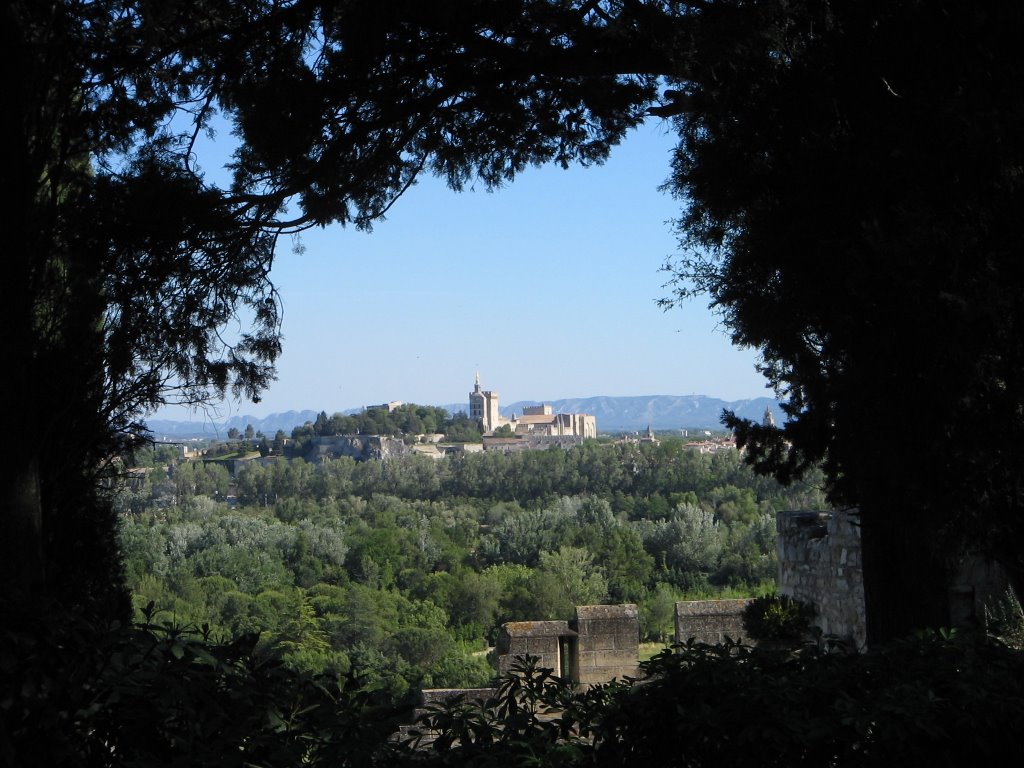
Afterwards we visited the pleasant park nearby with great views of the countryside.

We decided that the impressive fort (Fort Saint-André) we could see in the distance would be worth investigating. Avignon is technically two towns squished up against the river Rhône. Across from the walled centre of Avignon proper is a narrow island of parks, farms and caravan parks. On the other side of the island is the town of Villeneurve-lès-Avignon.

We walked over to Villneurve, and the tower that once guarded the town on this side of Pont St-Bénézet - Tour de Philippe le Bel - which was unfortunately was closed.

We had a pleasant stroll through the narrow winding streets of town, a reached the fort - although we did walk the long way around the hill.

Compared to visiting the monuments of Paris, there were few visitors at the fort. No queues: We paid our admission, were given a map and shown the door into the guardhouse which was closed behind us.

Altough the rooms were pretty much bare, we were pretty much free to wander around the towers (built in 1291) as we pleased: Through the bakery, the porticulis room, the muitions storage, toilets, and the prison chamber that prisoners had left grafitti in. The old, worn, narrow spiral starcases were a little hair-raising to use.


Walking towards the fort.


The guardhouse.


We also explored the rampart walls and a small chapel within the fort.

Also within the fort is an Benedictine abbey and the remains of a town. It was pleasant to wander around the gardens of the abbey (ranked as on of the top 100 in France) which had great views of Avignon.


View back to Avignon from the gardens of the abbey.


Some of the ruins within the fort.


The French government recently effectively abolished a public holiday (Pentecost Monday). This was understandably not popular, and back-peddled a bit, but the status of the holiday isn't clear.

Apparently, for the local bus system it was a public holiday, and so we missed our bus and had to walk all the way back to town.


Walking back to Avignon, we stopped in this leafy town square in Villeneurve for chocolate milkshakes.


For dinner we tried a quiet little Proveçale restaurant and dined outdoors in a warm, leafy courtyard.

05 June 2006

Day 8 - Palais de Papes and Pont Sant Bénezet

Well rested after our first night in Avignon, we got up early and headed for the Palais de Papes - the Popes' Palace from when the popes lived in Avignon during the 14th Century. The huge walls of the palace in the highest part of the city dwarf every other building - except perhaps the cathedral next door.

The comparative lack of crowds was a nice change. Many of the rooms were facinating, especially the Popes' Chamber and the massive chapel. From the top of the palace there is an excellent view of Avignon and the neighbouring countryside, including Fort St André on the other side of the river.


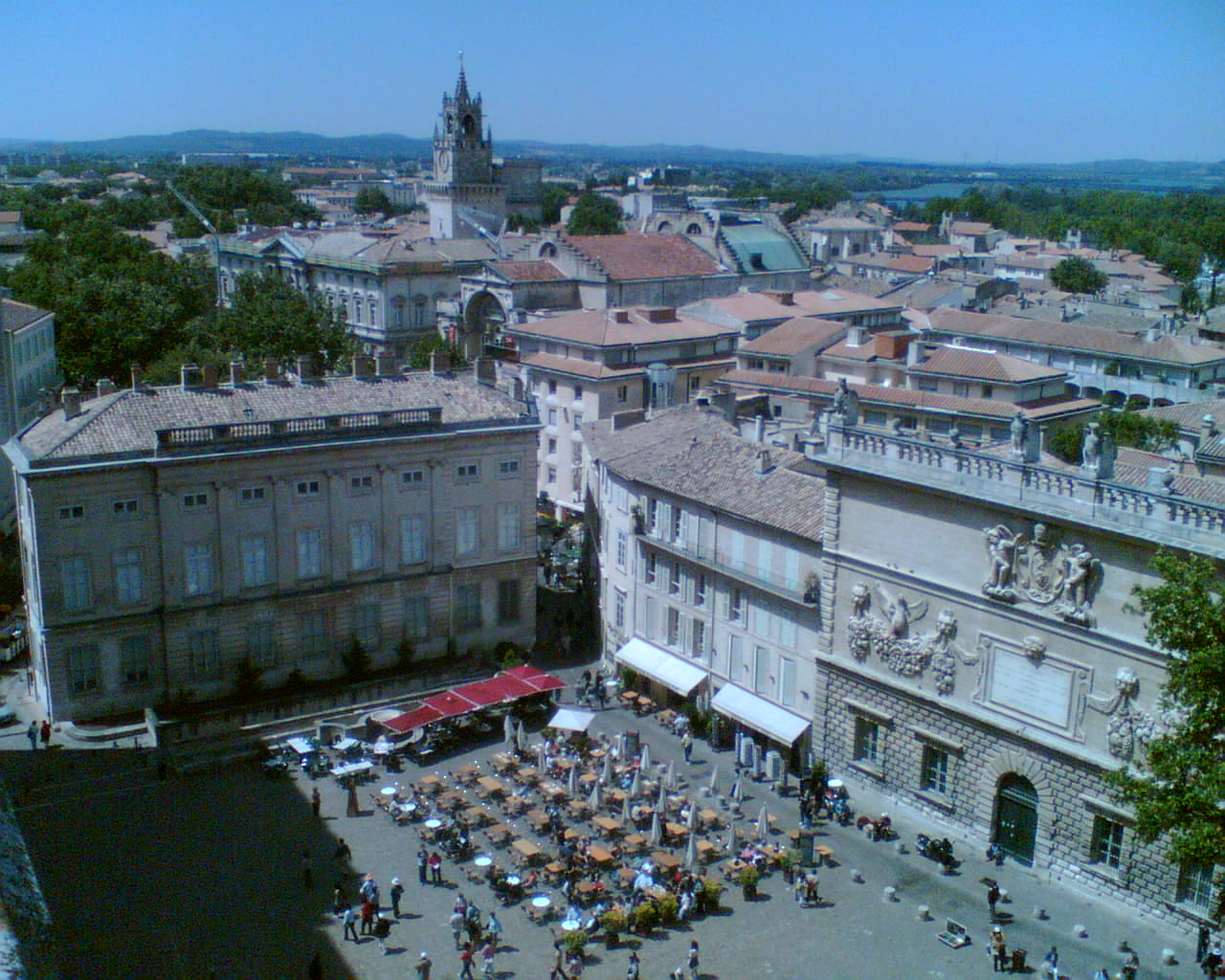
View from the Palais de Papes.


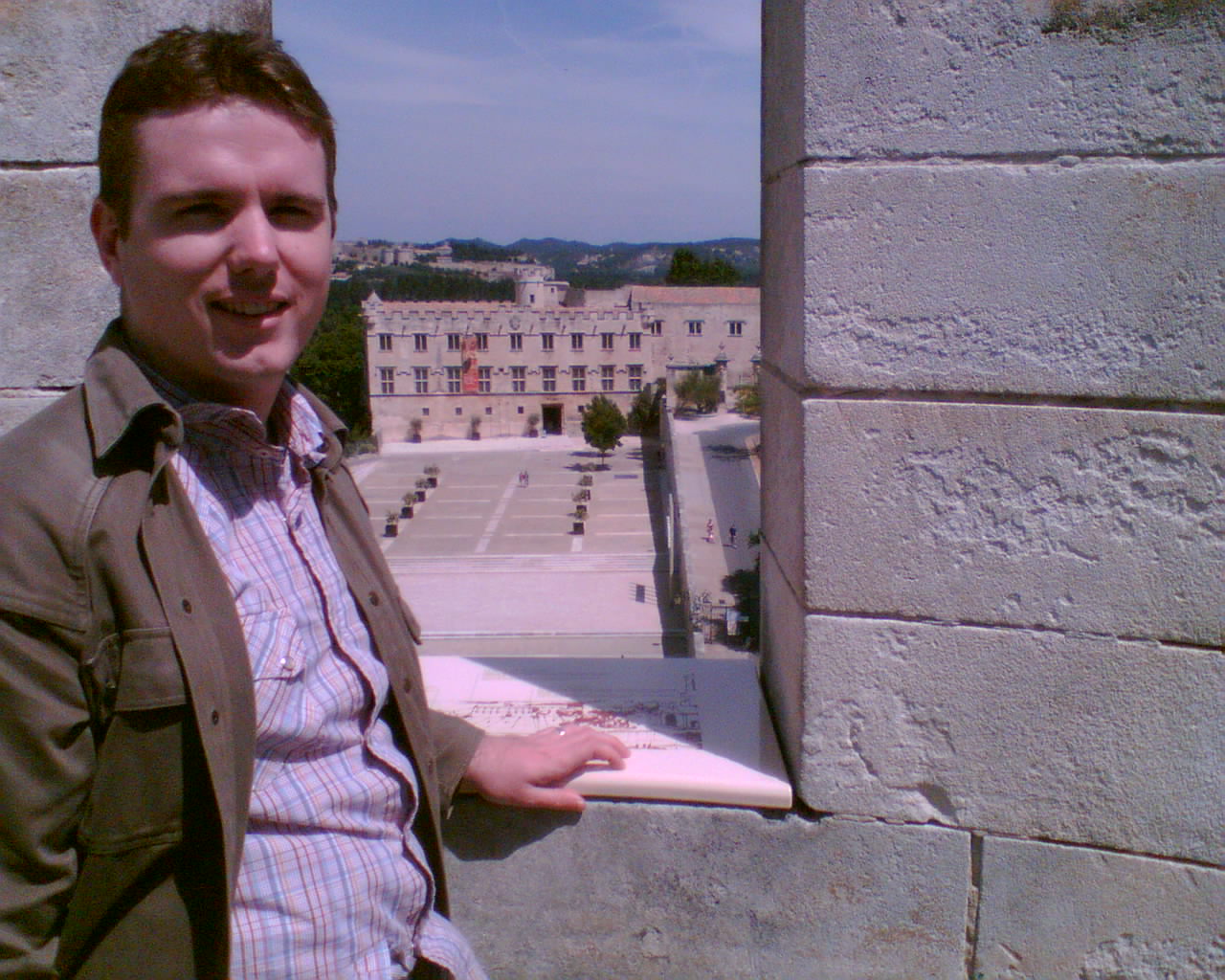
Evan at the Palais.


The palace hasn't been very well treated over the centuries and many rooms are bare, but it was an interesting experience.

After trying some specialties of Provence (chocolate coated nuts and marzipan fruit), we visted Pont Sant Bénezet - also known as the Avignon Bridge.

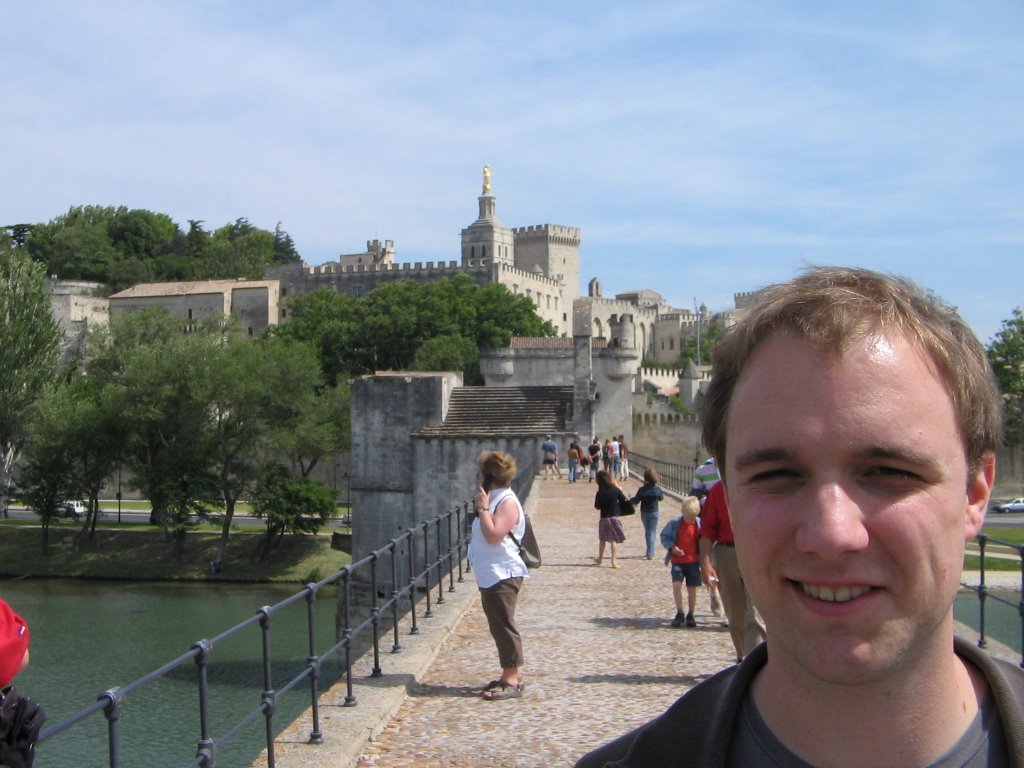
There are only a few arches of the bridge left - the bridge kept on being washed away by floods - and a small chapel (actually two chapels on top of each other) on the bridge. The history of the bridge is facinating although the long-winded audioguide was perhaps a bit much for such a short bridge.


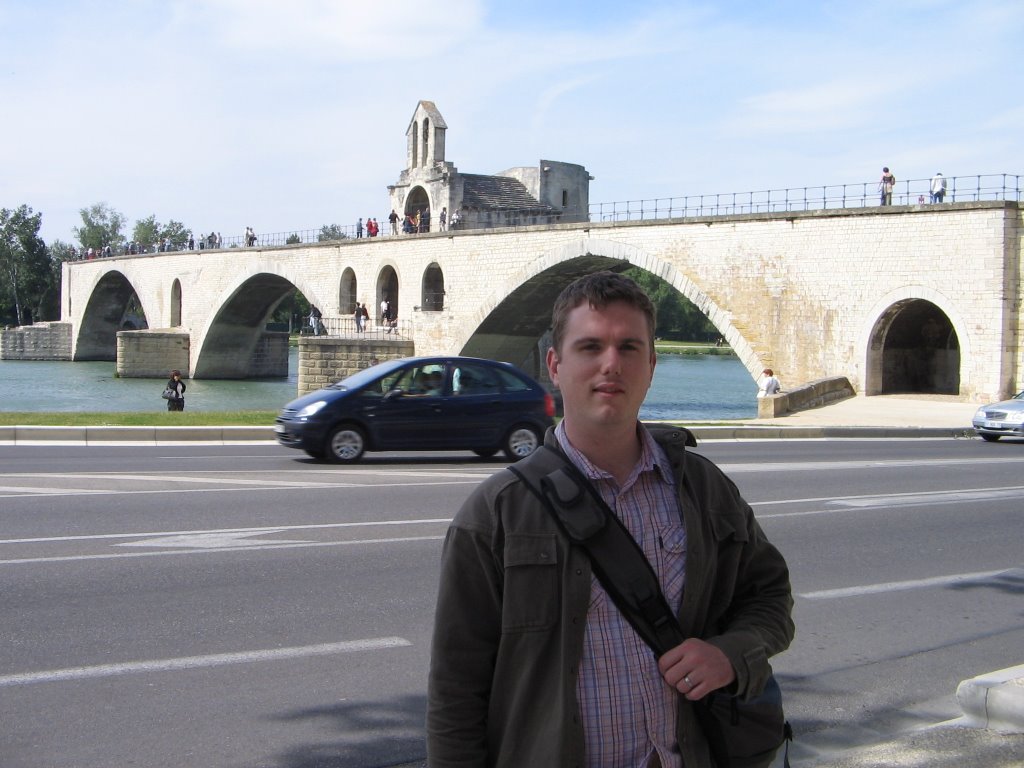
Evan in front of the Pont Sant Bénezet.


David being blown away by the wind on the Pont Sant Bénezet.


For dinner we tried a fondue restaurant and had fondue mains and fondue desserts.

04 June 2006

Day 7 - Place des Vosges and arrival in Avignon

Our last day in Paris began with a walk around the streets around the hotel in Nation (while we waited for our laundry to finish).

Evan had wanted to see Place des Vosges before we left, which is reputed to be one of the most beautiful squares in the world. The 17th century buildings were impressive, but their contents (hotels and boutiques) were largely uninteresting.

We had a quick final lunch at Le Pain Quotidien (and Evan bought their cookbook) then got on the TGV to Avignon.

The trip took about 3 hours and was very comfortable, and took us through some pretty French countryside which gradually became drier as we headed south.

After arriving in Avignon that afternoon we checked into the aptly named Hotel Mignon (Cute Hotel) which is inside the still standing old city walls.


In front of the Papal Palace in Avignon.


The Hotel Mignon.


We took a walk around the city taking in the sights and labyrinthine mediaeval alleys, followed by dinner at one of Avignon's many 'Chinese-Vietnamese' restaurants.

03 June 2006

Day 6 - Sainte Chappelle & Musée d'Orsay

This morning was taken up with checking out of our ultra budget shoebox and depositing our bags at Gare de Lyon for the day.

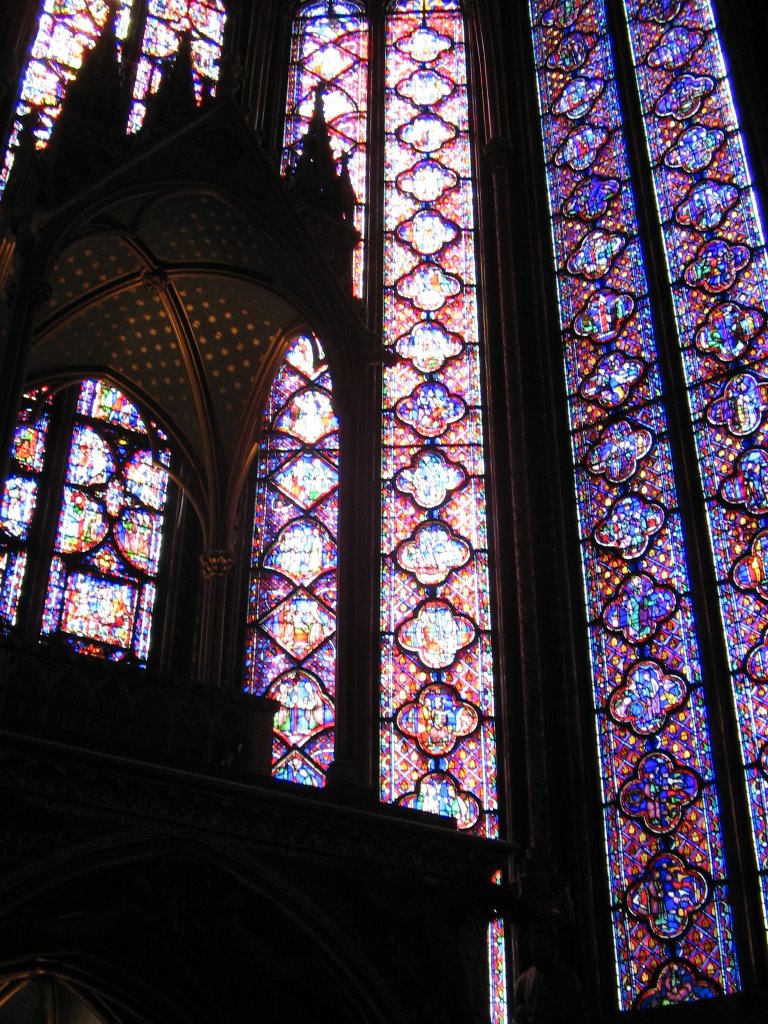
Then to Sainte Chappelle, a small (by French standards) mediaeval chapel on Île de la Cité surrounded by the newer Palais de Justice. Sainte Chappelle is remarkable for its near absence of walls, being nearly all stained glass. It is one of the most impressive interior spaces in the world.

It's worth commenting on the security checks we had to go through to get into Sainte Chappelle and other monuments. Bag checks and X-rays, and metal detectors make for very slow and long queues everywhere. The reasons for these checks is not always apparent and E didn't remember them being there in 2004. We can only guess it is a result of the London bombings.


The amazing interior of Sainte Chappelle.


After Sainte Chappelle we wandered a bit aimlessly and dropped into an old patisserie founded in 1802, Dalloyau, for cakes and macaroons. We enjoyed these in the Jardin du Luxembourg with some of the first sunny weather of our stay in Paris.


A delicious cake...


...and macaroons.


The Jardin du Luxembourg.


After our sugar break we did some fragrance shopping at L'Artisan Parfumeur and could not resist buying some more sweets at La Maison du Chocolat.


That afternoon we visited the Musée D'Orsay, famous for its impressionist paintings. A particular highlight was the collection of Art Nouveau objects.


The Musée D'Orsay.


A fantastic Art Nouveau room in the Musée D'Orsay.


We met up with friends Arwen and Alejandro for a delicious vegetarian dinner at a restaurant in le Marais whose name translates as 'The Supreme Victory of the Heart'. Evan had met Arwen through the Paris Quaker Meeting in 2004.


Arwen, Alejandro and David at The Supreme Victory of the Heart restaurant.


Our new hotel for one night was clean and comfortable.

02 June 2006

Day 5 - Versailles

Today we ventured by train out to Versailles. We headed, of course, up the wide leafy bulevards straight to the palace - the Chateau de Versailles.

The palace was impressive from outside. Almost as impressive was the huge crowd that had turned up on this wet and windy day.

The palace was just as impressive on the inside; huge guilt rooms with painted scenes on the ceilings. Half of the Hall of Mirrors had been renevoted, with the other half covered up.

Even though we walked through many rooms, we saw only a fraction of the palace. What we saw was packed with visitors and, appart from a handful of pieces, was lacking furniture. It was hard to get a feeling of how the palace was in its heyday.


Everything is big in scale at Versailles.


The Orangery.


The gardens are incredible - especially the distances. We walked through the gardens to the pink marble Grand Trianon: a pretty amazing building when you consider it was built so the King could escape the rigors of court life at the Chateau. Unlike the Chateau, the crowds at the Trianon were more bearable, and many rooms were decorated with furniture from various periods.


A room at the Grand Trianon.


Next we walked to the Petit Trianon - built for Marie Antionette as a mini getaway castle. Inside was interesting, but more fascinating were the grounds around the builing; especially the Queen's Hamlet. The Hamlet is a little pretend village where the Queen could come a play with the pretend villagers. It is obvious that the royalty were out of touch with the poverty of the commoners.


The Queen's Hamlet.


After the long walk back, we treated ourselves to a drink at a Salon de The, and then some sweet things from a patisserie.


A treat.


Back in Paris, for dinner we tried a French vegetarian restaurant in the Marais. The food was good and the service was friendly.

01 June 2006

Day 4 - The Louvre

An exhasting day. We continued to have bad weather: Cold and wet.

We started the day at Galeries Lafayette - a huge department store with a spectacular main hall and opposite the Opéra. We needed to find an electrical adapter, and afterwards we browsed the designer clothes (a little shocked by the prices). Anyone that knows David would know he couldn't leave without visiting the foodhall. lt was packed with beautiful cakes, breads, cheeses, chocolates and more. We bought some cheese and baguttes for lunch.


What a department store!


Lunch in the park.


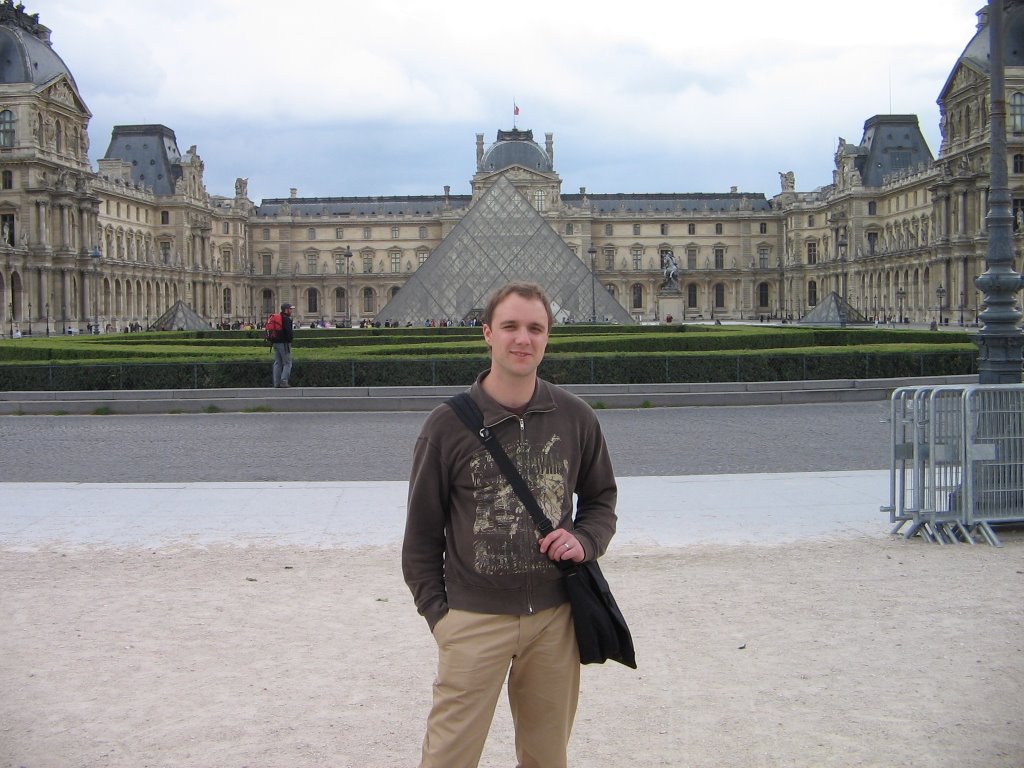
After lunch in the Jardin de Tuileries, we ventured into the monsturous Musée du Louvre. We barely scratched the surface of this incredible collection, but still saw to much to list. Some highlights included:


  • The medieval moats of the old fortress.

  • The ancient Egyptian collection.

  • The Winged Victory of Samothrace.

  • The crown jewels.

  • The Mona Lisa (of course).

  • Napolean III's apartments.


If we were to go again, we would probably not try to see so many things - we were a bit rushed. We would also consider the audioguide; the items are displayed with very little context.


The Louvre.


Napolean III's apartments.


Afterwards, we browsed the stores at the nearby Jardin du Palais Royal. One of the stores was Salons du Palais Royal, which only sells fragrances designed by Serge Lutens, most of which are only available in this store.

That night we had Japanese in the Marais.